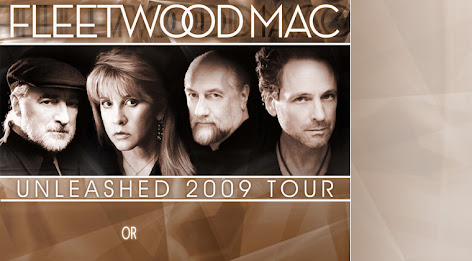
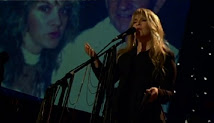
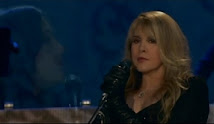
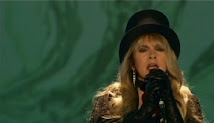
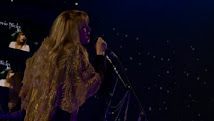
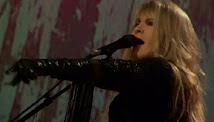
FLEETWOOD MAC UNLEASHED 2009 TOUR

FLEETWOOD MAC UNLEASHED 2009 TOUR
45-Date Tour Starts: March 1, 2009

Tuesday, August 25, 2009

The First Book by Resistance Works, WDC

The below endeavor will be the first of many. I hope, someday, that I will publish a book about Fleetwood Mac. But this one is better than anything I could do.

KEEP MOVING
The Michael Jackson Chronicles
_____________
ARMOND WHITE


ABOUT THE BOOK
“Has there been a more compelling show-biz/arts figure than Michael Jackson?”


In this collection, controversial critic Armond White chronicles the career of Michael Jackson. Written throughout his quarter-century as a critic, these essays focus on the workMichael Jackson produced AFTER the record-breaking commercial success of the Thrilleralbum. He examines the impact of Michael Jackson as a cultural phenomenon, aesthetic/music force and dance icon/show-biz influence. Armond White uncovers the deep meaning in Michael Jackson’s art—especially the songs and music videos created and associated with the Bad, Dangerous, HIStory, and Blood On The Dance Floor albums.

TO ORDER OR FOR MORE INFORMATION

resistanceworkswdc@yahoo.com

Sunday, March 29, 2009

Are You With Me?

The Unleashed Tour: Madison Square Garden (03/19/09)
Concert Review by John Demetry


Stevie Nicks: "Sometimes I think of Fleetwood Mac as The Furies. I came up with the idea of Fleetwood Mac: Unleashed because I felt we were once again unleashing the fury into the world, because we are that in a lot of ways."(1)

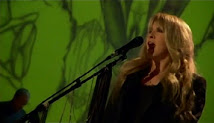
Right before Fleetwood Mac takes the stage, the menacing sound of frenzied insects fills the Madison Square Garden arena. The eerie artificial buzzing sound recalls the high-art antecedent of Jean-Paul Sartre's The Flies (his own representation of The Furies of Aeschylus) or the pop-art metaphor of the Wings of Pazuzu (swarms of locust representing the reality of Evil) in John Boorman's Exorcist II: The Heretic. In The Oresteia of Aeschylus, The Furies avenge murder. However, each act of vengeance incites another -- an unbroken chain that threatens individual sanity and social stability. In the context of Fleetwood Mac, that endless cycle resides in the lore of lead singers and former lovers Lindsey Buckingham and Stevie Nicks' unresolved break up (documented in Rumours (1977) -- a genuine pop phenomenon).

Whatever the reference, the insect static makes the point crystal clear: there's a disturbance in the culture. Something has gone wrong. Fleetwood Mac returns to set things right.

The band's signature track "The Chain" sounds the alarm: "Chain keep us together / Run in the shadows." The only song whose writing is attributed to all five members of the Rumours line-up -- the fifth being the retired keyboardist/songwriter/singer Christine McVie -- it also stands as the band's mantra. Love, responsibility, and chemistry keep the band together as they struggle to make expressive art in the shadows of the Fleetwood Mac juggernaut. In the context of the Unleashed tour, the anthem also encourages the audience -- driven by the primal appeal of John McVie's bass line and the urgency of Mick Fleetwood's drum beat -- to find the "chain" -- Love, humanity, culture -- that links them to each other in the shadow of a desensitizing popular culture.


Lindsey Buckingham: "Even though we were drawing on our own experiences, I don’t believe the songs on 'Rumours' were so starkly autobiographical. . . It was three writers cross-dialoging with each other. . . The tabloid (quality) of it was only revealed to us by our audience after the fact. . . [Now] you tend to see the irony in the songs. . . the heroicism we possessed. We saw. . . the music had redemptive power and could be a symbol for other people. The whole struggle had a meaning to it that was symbolic."(2)

Although a "Hits!" tour, Unleashed is no nostalgia trip. The band organizes the song's set list and designs each performance to create an experience that speaks to the audience's deepest needs. The show's set (see below for complete set list) runs from opener Buckingham's "Monday Morning" -- the first track on Fleetwood Mac (1975) -- to final encore Nicks' "Silver Springs" -- the band's last hit single, a b-side resurrected on the live album The Dance (1997). Between those bookends, the band splits the show into four waves -- each complete with its own dramatic climax: 1) Nicks' exit on "Sara"; 2) Buckingham/Nicks duet on Christine McVie's "Say You Love Me" to close the acoustic set; 3) Buckingham achieves catharsis with "Go Your Own Way"; and 4) Nicks goes beyond catharsis with "Silver Springs" in the show's final encore. Those waves build dramatically, propelled by the "cross-dialogue" ("running in the shadows") formed by the songs. The presentation of each song heightens the sense of the Buckingham-Nicks affair as ritual experience.

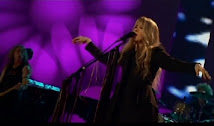
It begins with their attire. Nicks' costume changes establish the aura of rock romanticism (and mystery) that swirls around her tales of love and woe. Dripping from head to toe with frill and lace (black, then red, then black-and-red), she's an abstraction of feminine ideal and romantic fate. She once cited Dickens' novels of obsession (Great Expectations) and sacrifice (A Tale of Two Cities) as her inspirations. So when she sings, "Women they will come and they will go" during "Dreams," she refers not only to her replacements in Buckingham's heart, but also the revolving door of female pop stars that she outlasted. Also on "Dreams," she recalls Edgar Allen Poe: "Dreams of loneliness like a heartbeat, drives you mad / In the stillness of remembering what you had." Like a tell-tale heart (or The Furies), memories of Nicks will haunt her lover during inevitable heartbreak and disappointment. In the abstract ("dreams of loneliness"), audience desire for redemptive art will remain unmet by insufficient pop culture. The song ends with the promise of a healing rain. It's that cycle -- love, heartbreak, healing -- all of the songs dramatize.

Nicks' Dickensian extravagance contrasts with the simple lines of Buckingham's black jeans, low-necked red shirt peaking out of his black leather jacket. Against the shifting colors and images of the giant moving screens behind and above the band, Buckingham's every movement pops. During opener "Monday Morning," the screens turn the same color red as Buckingham's shirt. The graphic result captures the intensity of the song's emotions and establishes that his every gesture will communicate feeling: desire ("Monday morning you look so fine"), disappointment ("First you love me, then you fade away"), despair ("Got to get some peace in my mind").

Each of Buckingham's and Nicks' gestures achieves maximum impact and emotional legibility. Every (rationed) twirl sends the audience to the edge of ecstasy.

The first set ends with Nicks completing "Sara" by moving from her microphone to Buckingham's on the other side of the stage. Unable to make the "home" she longs for in the song, Buckingham plays out the end of the song with his head on her shoulder and hers on his. Then, she abruptly exits the stage -- taking a moment to hold the hand of backup singer Sharon Celani. The stage clears after her, leaving Buckingham alone with the spotlight, his guitar, and his "magic fingers" -- simultaneously projected on the giant screens surrounding the stage -- howling about his guardedness and isolation for an unplugged "Big Love." Thus begins the acoustic set, which also includes Buckingham's "Never Going Back Again," during which Nicks provides some harmonizing. She waits for her cues by turning her back a quarter to the audience, allowing her long, straight hair to cover her face. The image of her huddled form on one side of the stage while, on the other, Buckingham sings about his promise never to return again (after breaking down "one time," "two times," and, ultimately, "three times") makes their longing and pain palpable.

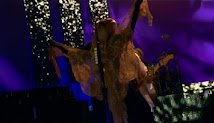
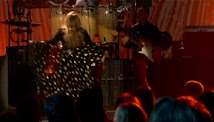
That longing and pain takes a spiritual toll. Fleetwood Mac expresses this metaphysical perspective in "Gold Dust Woman," which describes the allure of cocaine for the heartbroken rock goddess. During the extended instrumental close to the song, Nicks turns her back to the audience, hunches down, swivels her neck and head, and spreads her "Gold Dust Woman" shawl to transform into a demon. The image -- so striking with the gold shawl complimented by blue lighting -- conveys how these universal experiences -- heartbreak, longing -- impacts the social world. In the song, the heartbroken seek respite in drugs or, as Nicks now envisions the song, this sense of loss results in the desolation of the song's war-like imagery.


Lindsey Buckingham: "I think you have to be realistic about the fact that "Rumours" was a success for reasons other than the music. . . We put ourselves out there, and people started to invest in us more emotionally. And that was part and parcel of the phenomenon -- it had to do with the mythology around the record, and it would be unrealistic to not acknowledge that. I don't think that it diminishes the appreciation of the music in any way; it was just a scope that went beyond the music. . . At the time, though some of it was reported, it really was more word of mouth, and there was an authentic sense of a lore that grew up around it."(3)

Fleetwood's drumming is off the hook, but the audience is not. An inspired Fleetwood seemingly improvises a new drum part for the Madison Square Garden performance of Buckingham's "I Know I'm Not Wrong." After being featured on the last two Lindsey Buckingham solo tours, that Tusk (1979) track comes home. The Mac touch (a mystical chemistry) makes it shine: Fleetwood's drumming AND Nicks' harmonizing and playful shenanigans during Buckingham's horn vocalizations. (Imagine if X were a ska band.) Indeed, along with the McVie/Fleetwood rhythm section, the Buckingham/Nicks harmonies constitute the Mac magic. By this, the twelfth concert of the Unleashed tour, the harmonies generate goosebumps. Those harmonies keep the love story alive: these voices belong together. Their performance of "Sara" reiterates that fact when Buckingham's harmonizing vocals heighten the poignancy in the line: "I think I had met my match -- he was singing." That voice haunts Nicks' "Gypsy," as Buckingham sings in backup: "Lightning strikes, maybe once, maybe twice." Doing so, Buckingham takes the part of the first lightning strike (former love), while the "maybe twice" finds concrete form in their musical partnership, here demonstrated, while keeping the audience hanging in delirious anticipation. Even when Buckingham feigns missing his cue to resume guitar after the dramatic pause at the close of Nicks' "Landslide" -- answered by Nicks' luminous smile and mimicry of an orchestra conductor to get him back on the track -- it acts as an adorable pantomime of the "complex and convoluted emotional history," pace Buckingham, of rock 'n roll's legendary lovers -- an affair held in suspense by the stage's proscenium.

This catalogue of songs -- Unleashed! -- rivets the audience to two compelling figures' distinct takes on cycles of attraction and love, sacrifice and heartbreak, recrimination and forgiveness, art-making and perseverance within their own relationship. Buckingham's "I Know I'm Not Wrong" reveals his insecurities ("Now it's gone / Don't blame me") while boasting about his artistic/sexual prowess ("Here comes the nighttime"). Meanwhile, in "Sara," Nicks channels her Romanticism with help from her artistic muse ("Drowning in a sea of love"). That's the Nicks fix: she knows the personal is the popular ("where everyone would love to drown"). By the time the set reaches its official climax, Buckingham's "Go Your Own Way" gives the audience its needed release via Fleetwood Mac's Rolling Stones-inspired roof-raiser. The partners may "go their own way," but as the song begins in the present tense -- "Loving you ISN'T the right thing to do" -- the love remains. The song's catharsis -- and bittersweet understanding -- allow them to persevere. But after that catharsis, there resides a desire for something more. Fleetwood Mac unleashes The Furies. Love will transform The Furies.


Lindsey Buckingham: "When you contemplate going out there and doing some songs of Christine's that we are going to do this time, to me, there was the potential of making it a bit loungey -- having someone come in and do her songs. I think we are better served to interpret them in new ways ourselves, and in a way that resonate[s] with our own history."(4)

Who knew that all these years Christine McVie was writing the ideal duets for Buckingham and Nicks? For the first time, the Unleashed tour features Buckingham and Nicks trading verses and sharing the chorus on Christine McVie's "Say You Love Me" -- the Rumours line-up's first break-out single. The song typifies Christine McVie's specialness as a songwriter: catchy pop structure, complex power dynamics in romantic relationships, and celestial imagery. That Buckingham and Nicks, who formerly provided the song's dreamy harmonies, take over the lead attests to their status in pop culture's romantic iconography. These former California hippies now embody Christine McVie's mature, hard-won, Blues-based expressions of love. In this rendition, Buckingham gets Nicks "tingling right from my head to my toes" (we join her). Nicks leaves Buckingham "begging you for a little sympathy," which he sings with a pleading folk whinny. Their singular dynamic revitalizes the song's pop structure and power dynamics because the chorus finds both parties (female and male): "falling, falling, falling." In Christine's song, the woman is the strong one, as the man is unable to say "I love you." In the new duet, apropos their iconography, B&N remain star-crossed equals.

Not only Christine McVie's songs ("World Turning" and "Don't Stop"), but the entire Mac catalogue makes itself available to the interpretations of the Buckingham-Nicks line-up. Fleetwood Mac founder Peter Green's "Oh Well" unites the elements of Buckingham's concert persona -- sexual anxiety ("Tusk"), harlequin wit ("I Know I'm Not Wrong"), existential angst ("I'm So Afraid"). Green always explores his struggles with faith in his music, often through Blues-inspired wit (Green and Buckingham are both music fetishist-anthropologists): "Now when I talked to God I knew he'd understand / He said 'Stick by me and I'll be your guiding hand.'" Acting out the lines, Buckingham stares at his hand with the fascination, fear, and confusion of a pre-pubescent discovering that his body isn't entirely under his control. Yet, with that hand, Buckingham proceeds to thrash through the song on his guitar. The apparent dichotomy verifies Nicks' insight into Buckingham on the Say You Will (2003) track "Thrown Down" (not played during the concert):

Faith is a hard thing to hold on to
Something inside you says I don't have to
You're not like other people, you do what you want to

Many of Buckingham's songs create this sense of dislocation. On the solo track "Go Insane," Buckingham identifies the source of this identity crisis ("I go insane / Like I always do") as the pressures of art-making ("I lost my power in this world / And the rumours are flying") and heart-aching ("And I call your name / She's a lot like you"). Performed in the Unleashed set list after "Gypsy" while Nicks changes costume for "Rhiannon," "Go Insane" incorporates Nicks as a signifying absence -- a mirage conjured by the song's lyrical lightning bolts. She's the longed-for ideal -- the elusive "Gypsy" and "Rhiannon" -- Buckingham seeks to find reflected in other women. As an acoustic mainstay in the Mac set list since The Dance (1997), "Go Insane" encouraged audience contemplation. Now, this full-band arrangement, honed on Buckingham's recent solo tour, calls for a dance response. In this culture, everyone is bound to "go insane." The return to the song's synth-rock roots feels like liberation. Just as Nicks impacts this solo Buckingham track, Buckingham playing guitar to -- and silently singing along with -- Nicks' solo hit "Stand Back" reinforces the spectacle of her holding out for more hopeful resolutions: "Take me home!" The song's fake-out ending signals an affirmative moan: "Ooooh yeah, Oooooh yeah, Ooooh yeah!"

Even when saying "goodbye my friend," Nicks "would like to leave you with something warm." A Tusk track performed live for the first time during the Unleashed tour, "Storms" proves a "warm" composition, indeed. During the acoustic portion of the set, the band recreates the song's enveloping atmosphere. Fleetwood comes down and plays drums on his "cocktail" kit, holding the song steady through the emotional storms of Nicks' lyrics. As Nicks sings, despite best intentions, the song leaves you with despair: "I have always been a storm." She explains the devastation of a failed love affair: "We were frail." Bassist McVie and the back-up singers fill out the spaces, seemingly to cradle the audience on the currents of a "blue calm sea" while Buckingham's guitar pierces the serenity with a haunting melody. Nicks and Buckingham close out the song -- acapella -- harmonizing on Nicks' repeated lament: "Not all the prayers in the world could save us." It feels like the bough breaks.

My body tries to cry
Living through each empty night
A deadly calm inside

Nicks now introduces the song as "Always Been A Storm" to emphasize its timelessness and its sense of pervasive, perpetual pain. Fleetwood Mac resurrect "Storms" to address the trauma of the post-9/11 era and the dearth of pop culture sustenance ("My body tries to cry") which created what critic Armond White refers to as a culture of "hipster nihilism." Fleetwood Mac makes spectacle that "resonates with our own history" -- the world turning on the axis of our own feelings.


Stevie Nicks: "After 9/11, everything took on a different meaning."(5)

Just as Fleetwood Mac's crisscrossing narratives (and beds) dramatized the spiritual toll of the sexual revolution, their art today addresses the spiritual crisis of the post-9/11 era. In concert, Buckingham introduces "Second Hand News" by explaining that Rumours reconciled "emotional opposites." Now, the entire culture needs reconciliation. After "Go Your Own Way" provides catharsis, the band returns for the encore. The set proper provided unifying spectacle and emotional release. Now, the encore invites the sensitized audience to expand its social imagination.

Don't dismiss Nicks when, in the above-cited interview, she refers to "World Turning" as a premonition of "a world in chaos" after 9/11 and the Iraq War. Understand that, as in her songs, a mystical concept like "premonition" provides a poetic way of explaining a truth. As a Christine McVie-Lindsey Buckingham scribed "Blues" song, "World Turning" speaks to timeless anxieties that fit post-9/11 malaise. The culture displaces emotional response and exploits spiritual need: "Everybody's trying to say I'm wrong / I just wanna be back where I belong."

The entire band leaves the stage mid-song, leaving Fleetwood behind for an extended drum solo. Here, the song takes on political immediacy. Fleetwood initiates a stream-of-consciousness call-and-response, first between his instrument and the "unleashed" vocalizations of his psyche ("Hi ho, Silver!"). Then, in a Brechtian move inspired by hiphop, Fleetwood poses a challenge to the audience, repeating: "Are you with me?" to the affirmative response of the Madison Square Garden crowd. It recalls Son of Bazerk's challenge to dismantle hiphop tribalism in the multi-city shout outs in "Are You Wit Me" on the essential Bazerk Bazerk Bazerk (1991). Fleetwood invites the audience to appreciate that his drumming conveys his personality, to respond, and to join in the spectacle. As a dramatic representation of this concept, the members of the band return to the stage to complete the song. In a review of the Pittsburgh concert at the Fleetwood Mac fan board The Ledge, michelej1 describes the staging of the bandmates' return: "It’s like a surreptitious invasion." That's appropriate as Fleetwood Mac's salute to Fleetwood carries political force. Fleetwood's drum solo establishes the psychological distinctiveness of each band member's "instrument." They come together to achieve a common purpose. And they take the stage to impact the spectator and the culture.

After the last two years' divisive election frenzy, the Unleashed tour reveals how a rock concert can act as a real political convention (unifying spectacle) and a real inauguration (revitalizing meaning). Bill Clinton's successful Presidential campaign in 1992 reduced Christine McVie's "Don't Stop" to a political slogan: "Don't Stop Thinking About Tomorrow!" Clinton exploited McVie's pop genius: she applied the buoyancy of a shuffle to the intimate circumstances of heartbreak and healing. On the Unleashed tour, Fleetwood Mac restores the song's personal meaning (via the Buckingham-Nicks dynamic) and its expansiveness (to a responsive audience). They share the song's hard-earned wisdom by living it on stage.

Because the Buckingham-Nicks spectacle awakens audience's capacity for feeling and unity (culminating in the catharsis of "Go Your Own Way"), it also stands as a symbol for private pain and social distress (blue-state/red-state divisiveness, tribal war resulting in 9/11 and Iraq War quagmire). For the final encore Nicks conscientiously re-imagines her famous "Silver Springs" spell. During The Dance, Nicks ended "Silver Springs" by turning to Buckingham and cursing him: "You'll never get away from the sound of the woman that loved you! Never get away! Never get away! Never get away!" Now, she audaciously aims this call directly to the audience. The gesture points up the significance of the word "sound" -- the art she makes of her pain and the drama the band constructs out of lost love. Through art, spectacle, ritual, Fleetwood Mac transforms The Furies into Justice, the radical shift in human possibility on which civilization was built in The Greek Tragedy of Aeschylus.

Crouched down (as low as her stiletto boots allow), Nicks delivers her unbridled moan. Stevie Nicks' body finally cries. Are you with her?


UNLEASHED SET LIST

I

Monday Morning
The Chain
Dreams
I Know I'm Not Wrong
Gypsy
Go Insane
Rhiannon
Second Hand News
Tusk
Sara

II

Big Love
Landslide
Never Going Back Again
Storms
Say You Love Me

III

Gold Dust Woman
Oh Well
I'm So Afraid
Stand Back
Go Your Own Way

IV

World Turning
Don't Stop
Silver Springs


Footnotes:

(1)101.9 RXP - The New York Rock Experience
(2)Lehigh Valley Music
(3)msn.music
(4)CNN.com/entertainment
(5)msn.music

Sunday, March 22, 2009

New Fleetwood-Mac Related Releases (2009)

New Fleetwood-Mac Related Releases

2009 Edition: New Fleetwood-Mac Related Releases
(for 2008 releases, please visit 2008: The Year In Mac, Part 1)

1. Albums/EPs
2. Singles
3. Individual Tracks
4. DVDs
5. Covers/Re-Mixes
6. Podcasts, etc.


ALBUMS/EPs

Stevie Nicks: The Soundstage Sessions (CD, iTunes, Amazon MP3) (Release Date: 03/31/09)


The Mick Fleetwood Blues Band (feat. Rick Vito): Blue Again (CD) (Release Date: 03/17/09), (iTunes) (Release Date: 03/03/09)


Lindsey Buckingham: Gift of Screws (EP) (Release Date: 01/06/09)


SINGLES

Stevie Nicks: Crash Into Me/Landslide - Single (MP3) (Release Date: 03/17/09)


Stevie Nicks: Rhiannon/The One - Single (Promotional) (MP3) (Release Date: 2009)


Peter Green, Ian Stewart, Charlie Hart, Charlie Watts (of The Rolling Stones), Brian Knight: Trouble In Mind - Single (iTunes) (Release Date: 02/01/09)


Bob Welch: Ebony Eyes - Single (iTunes) (Release Date: 01/05/09)


INDIVIDUAL TRACKS

Lindsey Buckingham (guitar): "Second Hand News" (track), Under the Covers, Vol. 2 by Matthew Sweet & Susanna Hoffs feat. Lindsey Buckingham (guitar) (iTunes, Amazon.com) (Release Date: 07/21/09)


DVDs

Stevie Nicks: Live In Chicago (DVD, iTunes) (Release Date: 03/31/09)


COVERS/REMIXES

"Landslide" (track), At Last by Ann Hampton Callaway (iTunes)

"Wild Heart" (track), Reviver by Abe Vigoda (iTunes)

"Stand Back - Eli Remix" (remix) & "Stand Back - Beat-A-Pella" (remix), Money Lotion, Vol.7 EP by Roctakon & Eli (Vinyl)

"Second Hand News" (track), Under the Covers, Vol. 2 by Matthew Sweet & Susanna Hoffs feat. Lindsey Buckingham (guitar) (iTunes, Amazon.com) (Release Date: 07/21/09)


PODCASTS, ETC.

Mick Fleetwood: Celebrity Playlist Podcast (iTunes) (Release Date: 03/17/09)

Tuesday, December 23, 2008

2008: The Year In Mac, Part 1

Here are the Fleetwood Mac-related music releases in 2008:

RELEASES

FULL-LENGTH RELEASES

Lindsey Buckingham: Gift Of Screws (CD, Vinyl, iTunes)

Lindsey Buckingham: Live At The Bass Performance Hall (CD/DVD, DVD)

Christine McVie (as Christine Perfect): The Complete Blue Horizon Sessions (CD)

Stevie Nicks: Soundstage (PBS, Blu-Ray)

The Mick Fleetwood Blues Band (feat. Rick Vito): Blue Again! (CD)

Jeremy Spencer: In Session / In Concert (iTunes, DVD, CD)

Peter Green: The Anthology (CD)

Dave Mason: 26 Letters 12 Notes (CD, iTunes)


SINGLES & INDIVIDUAL TRACKS

Lindsey Buckingham: Did You Miss Me (Single) (iTunes)

The Mick Fleetwood Blues Band: "Where The Wind Blows" (track), Love Ride 25 (iTunes)

Mick Fleetwood: Eve of Destruction 2.1 (Single) by McGuinn, McGuire, Fleetwood and Smallwood (iTunes)

Mick Fleetwood: "Grafton Street" (track), Safe Trip Home by Dido (iTunes)

Bekka Bramlett: "What Happened" (track), The Imus Ranch Record (iTunes)

Bekka Bramlett: "Carved In Stone" (track), 1000 Miles Of Life by John Oates (iTunes)

COVERS & REMIXES

"Black Magic Woman" (track), Shake Away by Lila Downs (iTunes)

"Silver Springs" (track), The Imus Ranch Project by Patty Loveless (iTunes)

"Trouble" (track), Covers EP by French Kicks (iTunes)

Own Way 08 - EP, Steve Murano (iTunes v.1, iTunes v.2)

Saturday, September 6, 2008

Children Will Listen

INTERVIEW: Todd Stephens (filmmaker)
Interview by John Demetry


The Pet Shop Boys recently announced interest in working with Stevie Nicks. She should do it.

Surely, the Pets could create musical spectacle out of Stevie Nicks' particular relationship to gay audiences. Think: Barbra Streisand's cover of Stephen Sondheim's "Children Will Listen" or Donna Summers' disco-Cinderella album Once Upon A Time (1977). The Pets, themselves, subverted (and humanized) the nature of Madonna's gay fandom in their remix of "Sorry." They honored (and, yes, humanized) Liza Minnelli's camp status on their collaborative cover of Sondheim's "Losing My Mind."

Such a collaboration -- between Stevie Nicks and the Pet Shop Boys -- might provide a needed gesture. There exists a need for both gratitude/recognition (for gay fans' support) and, Nicks' specialty, for post-sexual liberation instruction in romance and perseverance (for gay men's romantic-sexual folly). The children will listen, Stevie!

Filmmaker Todd Stephens listened. . . to a lot of Stevie Nicks. The arc of Stephens' filmography illustrates both these needs.

His screenwriting debut, Edge of Seventeen (1998), dramatized a teenage boy's self-discovery and painful initiation into gay nightlife, where even in a small town "sex is a cruel, competitive sport" (pace the Pets' "For All Of Us"). He followed that up with his directorial debut, Gypsy 83 (2001), which explicitly linked the allure of Stevie Nicks to both two friends' desire for a mother figure and an elusive mother's desire for freedom.

Finding a franchise of his own, Stephens, with Another Gay Movie, made ribald spoofery and credible farce out of the silliness of (gay) sex -- and the genuine desire for connection it expresses. Now, he continues the franchise with Another Gay Sequel (2008), which proposes a campy-colored fantasy land, a world without Stevie. . .

Stephens' new movie's release on August 29, 2008 provided the happy opportunity to ask him, a Stevie fan and maker of films aimed at gay audiences, questions about his interest in Stevie Nicks and its impact on his work. He was kind enough to answer.


-----------------------------------


Heroes Are Hard To Find: You named your first two movies -- Edge of Seventeen (writer) and Gypsy 83 (writer-director) after Stevie Nicks songs. The plot of Gypsy 83 even revolved around a couple of Stevie fans. Another Gay Movie contained a hilarious Stevie joke (involving a blind girl draped in lace, twirling at a party). So is it safe to assume that you are a Stevie fan?

Todd Stephens: To say I am a Stevie fan would be the understatement of my life.

HRH2F: Do you remember your first time? When was your Stevie cherry popped?

TS: Like many of us, I feel like Stevie and Fleetwood Mac were part of the soundtrack to my childhood. I remember listening to “Sara” in the back of our yellow Vista Cruiser station wagon. But for me, it was always more a background track - until I saw the Street Angel tour in 1994. My boyfriend and I went on a lark, and that night the spell was cast upon us.

HRH2F: Why do you think Stevie has such a strong gay following? Does she still?

TS: She will FOREVER! I think it comes down to two words -- the drama. The drama of her words, her voice; her life. Like any classic gay icon, Stevie has been through many ups and downs - and we relate to that. And if Stevie can twirl through it, so can we!

HRH2F: What's your all-time favorite Stevie song (solo or Fleetwood Mac)? Why?

TS: I think “Storms.” It just kills me every time I hear it. “Never have I been a blue calm sea; I have always been a storm.” I still get the chills when I hear it. Something about Stevie's writing resonates on a primal level, and that is a primal example.

HRH2F: Does the spectacle of Fleetwood Mac's star-crossed lovers -- Lindsey Buckingham and Stevie Nicks -- speak to you?

TS: It's always something I've been fascinated with. Whenever I initiate someone into Stevie-land, I tell them the story of Lindsay and Stevie by showing them live performance videos from the Rumours, Mirage and The Dance tours. You can see the whole story in Stevie's eyes and voice - complete with a beginning, middle, and end. “And I can still hear you saying you would NEVER break the chain!”

HRH2F: In Gypsy 83, the characters take a trek to Night of a 1000 Stevies in NYC. Have you ever attended? What were your impressions?

TS: Oh my dear, I believe I started going in '94 and have only missed one year since. For years I used to dress, and I have to say - I have Stevie's eyes - and the Polaroids to prove it! It's been a while since I've donned the fringe and lace, but I keep threatening to make a new shawl.

HRH2F: I had thought Stevie-ness would provide the Todd Stephens stamp. Why no Stevie reference in Another Gay Sequel?

TS: Good point - I hadn't thought of that! I'll make sure not to commit such an oversight in the future!

HRH2F: What is the appeal of Another Gay franchise to you?

TS: That it gives us gay folks the opportunity to laugh at ourselves. That it celebrates our sexuality without judgment, no matter how “unorthodox.”

HRH2F: I get the impression that your use of Yaz's "Nobody's Diary" in the '80s-set Edge of Seventeen was very personal for you. That moment really resonated. How do you get from Yaz's Alison Moyet to Amanda Lepore (who makes a cameo in Another Gay Sequel)? What does this suggest about how pop culture has changed and about how gay culture has changed?

TS: I have to say, I recently saw Alison Moyet at the Yaz reunion and it was one of the most amazing concerts of my life. Like a culmination of my youth. Alison and Amanda are two different sides of the gay icon spectrum - one is heart, the other, art. As a Gemini, I take inspiration from both!

HRH2F: What's your favorite "gay movie"? Why?

TS: I was going to say Carrie but that probably doesn't count. I think my favorite gay film is Maurice by Merchant Ivory. I'm always fascinated by what it was like to be gay in bygone times - and this film captured it beautifully.

HRH2F: Do you, as a moviegoer, have a movie boyfriend: a movie star for whom you harbor a schoolgirl crush? Who is it?

TS: Brent Corrigan [ed: Stan the Merman in picture left]. Just kidding, this is really lame but I used to crush on Eric Stoltz. Yes, the kid from Mask! Isn't he HOT?!! I love redheads ;)

HRH2F: You happened to work with my current movie boyfriend on the first Another Gay Movie. What is Darryl Stephens really like? lol

TS: He's shorter than you'd think. And twice as sexy.

Saturday, August 16, 2008

Gift Wrap

Gift of Screws (Album Cover Art), Lindsey Buckingham
Album Cover Art Review by John Demetry


A friend of mine sent me this quote to illustrate his own reaction to the album cover art for Lindsey Buckingham's Gift of Screws:
"'Despair' is a sin (since it involves the abandonment of hope in eternity). So I opt instead for 'desolation,' which is not a sin, merely a psychological response to everything around one being in an advanced state of disintegration." - David Warren, Essays On Our Times


Once upon a time, a record sleeve beckoned the consumer to check out the music inside. At home, everyone from teenagers of all genders with schoolgirl crushes or music aficionados of all ages sprawled out on their bedroom floors taking in the record sleeves -- the art design, the track lists, the lyrics -- while the music played. The vinyl medium forced the listener to remain attentive, so as to flip the disc over when the side completed. Record sleeves served many purposes: something tactile, functional, and beautiful. It helped unify the experience. That's part of how art was bourne out of the necessities of the medium -- and the desires of the mass audience.

Times changed. First, Compact Discs, then iPods shrank album cover art to miniature size. One might counter that the iNternet age features different ways of viewing and experiencing album cover art. Examples: iTunes permits the listener to expand the size of the album cover art, iTV blows up album cover art to the high-definition size of a television screen, Internet advertising features the album cover art -- making it available for copying and pasting. If you want to be interactive, you can set album cover art as your desktop wallpaper. Like the music itself, in these contexts, album cover art becomes background noise -- and status symbols. Each technological "advance" signals economic disparity and aesthetic disconnect. This shift indicates that the relationship between pop audiences and pop art is "in an advanced state of disintegration." To quote Armond White in First of The Month on the shrinkage problem (here, in reference to movies): "As movies shrink, so does their popular effect."

No wonder Lindsey Buckingham, like Warren quoted above, opts for "desolation" -- as represented by the cover art of his upcoming album Gift of Screws (release: 09/16/08). He conveys this response via a combination of elements:

1) the directness of Buckingham's pose
2) the blurriness of the photograph in contrast to the clarity of the font
3) the lighting that draws the hollows in his cheeks and the depths of his eye sockets while shading the right side of his face
4) the contrast of the photograph's palette
5) the white font of his name that recesses and the red font of the album title that pops (establishing perspective)

These compositional components are experienced in a different way than album covers past. Remember, album covers are not, now, primarily tactile objects. Back in 1979, David Byrne and Talking Heads highlighted the significance of that tactility with the raised black-on-black manhole-cover design for Fear of Music. The cover of Gift of Screws is not as sublimely rendered as Byrne's pomo conception. Talking Heads in 1979 made you feel twice.

Buckingham in 2008 makes you look twice. Confronted with the off-putting presentation of Buckingham's countenance, many Mac fanboard members expressed the anxiety it elicits in terms existential (nausea), mortal (illness/corpse), and scatological (you can imagine). You try to shake the cobwebs, to blink Buckingham back into focus, to shift perspective from the clear foreground (text) to the blurred background (photograph). The picture remains blurry, but a second look clarifies its meaning.

As amateur photographer and economist Gaston Diaz points out, the photographer snapped the picture while the camera was in motion -- as if it were bumped. Therefore, the photograph actually puts Buckingham in the context of the world's instability. That accounts for the facial expression and contours that signify "desolation": loneliness and woe. The muted -- almost black-and-white or sepia -- palette and off-center lighting emphasize Buckingham as form. This form's lines etch his experiences: of art-making, of 21st-Century consciousness. When I saw the Gift of Screws cover, I thought: "That's how I feel when I'm watching the news." Is that connection amidst disintegration the "gift of screws"?

Buckingham took the album's title from an Emily Dickinson poem:

Essential oils are wrung
The atter from the rose
Is not expressed by suns alone,
It is the gift of screws.

Writing on Dickinson in The Atlantic, Martha Hale Shackford explained that in these lines "irony and paradox appear in those analyses of truth where [Dickinson] reveals the deep note of tragic idealism." As described above, Buckingham makes the experience of "irony and paradox" visually palpable (like Dickinson's essential oils/atter; suns/screws dichotomies). On first look at the Gift of Screws album cover, one experiences the world's instability. On second look -- with a turn of the screw -- one finds the promise of a shared sense of desolation. The experience of pathos sustains -- in fact, requires -- one's "hope in eternity."

Buckingham expresses this combination of suffering and hope -- humility really -- with his bent frame and upward eyeline. All of Buckingham's solo albums feature him on the cover -- as if to distinguish those works from his with Fleetwood Mac (not unlike Bryan Ferry's or Morrissey's portraits on their solo outings). With each album cover, the eyelines reflect the tone of their respective albums: introspective (Under the Skin (2006)), restless (Out of the Cradle (1992)), paranoid (Go Insane (1985)), and covetous (Law and Order (1981)). Of all those covers, Gift of Screws is most similar -- compositionally -- to Law and Order.

On that 1981 cover, Buckingham both expresses desire and makes of himself a conspicuous object of desire. The black-and-white photograph makes him look burnished, a gold dust man. Here, Buckingham's exaggerated tan -- suggestively exotic -- resembles the iconic Jon Hall in John Ford's film The Hurricane (1937). Indeed, Buckingham cites Ford as a favorite filmmaker. Buckingham seemingly intuits in Ford's films the aesthetic of uncontainable desire within social structures: such as manifest destiny and hegemony (i.e. Law and Order). Ford, most famous for directing Westerns, probably provides the inspiration for the Monument Valley-cum-L.A. metaphor of the sublime "Shadow of the West" on Side 2 of Law and Order. Notably, "Shadow of the West" is the only song on Law and Order with no lyrics printed in the liner notes. This cues listeners to shift attention to the album cover, which speaks for these lyrics:

Memories like shadows scorched in the sand
I'm alone, a lonely man
The setting of the sun scares me to death
I'm a shadow of the west

The cover of Gift of Screws awakens consciousness to these anxieties (isolation, mortality) through a disruptive process of "irony and paradox." Law and Order's cover kept up with radical changes in pop music representation (post-punk, New Wave) by simultaneously synching with Ford's (Hollywood's) ambisexual codification of desire (concurrent with the music's sublime nostalgia). Now, Buckingham addresses contemporary folly by tightening the screws on that earlier image. He wrings a spiritual understanding from the earlier representation of uncontainable desire and shared sensitivity. Regarded as a completed cycle, the artwork for Law and Order and Gift of Screws charts the genesis of Beefcake back to the source of Desire -- an understanding that might come with age or even parenthood. This new album cover indicates that Buckingham remains attuned to the needs of the millennial audience -- even as the image suggests an artist who might not be simpatico with the contemporary popular idiom. This bright knight rejects the fashionable pose of "despair."

Sunday, August 3, 2008

Have Mickey Mouse Guitar -- Will Travel

Did You Miss Me, Lindsey Buckingham
Single Review by John Demetry


Pop music hooked Lindsey Buckingham a long time ago. As a California kid captivated by his older brother's collection of 45s, he set out to understand pop's allure by mastering its language. Simultaneously, this pursuit enabled him to form his own identity by differentiating himself from two over-achieving older brothers (who excelled at sports, especially swimming). Now, the deceptively simple pop structure of Fleetwood Mac guitarist-singer-songwriter-producer Buckingham's new solo single Did You Miss Me hooks listeners to Buckingham's personal Odyssey, driven by these twin Desires (pop connection and individual definition). Have Mickey Mouse guitar -- will travel.

In "Did You Miss Me," Buckingham charts this psychological/aesthetic journey -- then brings it up to date. "Did You Miss Me" conveys his loneliness in resonant temporal/geographical metaphors, first recalling Fleetwood Mac's "Gypsy": "I took a trip out of town / A hundred years underground." Then, he summons imagery reminiscent of Irish folk standard "Carrickfergus" to make palpable his longing: "Had to swim / across the sea." Stephen Holden summarized this approach in his New York Times review of Buckingham's 1993 album Out of the Cradle: "Buckingham's psychological changes parallel an exploration of his musical roots." Throughout "Did You Miss Me," Buckingham collapses the temporal and spatial, psychological and musical -- achieving intensity:

I
A hundred years out of town
It's not so long, so I found
Just long enough to get free

II
Look at us now
The years fall down
Show me how

Despite these antecedents, "Did You Miss Me" represents neither Buckingham's solo tendency toward experimentation (Go Insane (1984), Under The Skin (2006)) nor inclination for pastiche (Law and Order (1981), Out Of The Cradle (1992)). With those works, Buckingham deconstructed the pop codes that first turned him on and that brought him unimagined success -- pop connection -- with Fleetwood Mac's Rumours (1977). Unlike those transient titles of singles past -- "Go Your Own Way," "Trouble," "Holiday Road," "Go Insane," "Countdown," "Show You How" -- the query "Did You Miss Me" promises a return, a summation, and -- most tantalizingly -- a seduction.

Buckingham calls for a return to feeling. That's his great 21st-Century theme, beginning with the Fleetwood Mac album, the title of which (from a Stevie Nicks track) acts as an invitation: Say You Will (2003). Of Buckingham's own work, "Did You Miss Me" most recalls his most "pop" couplet from Say You Will, the magnificent duo: "Steal Your Heart Away" and "Bleed To Love Her." With "Did You Miss Me," Buckingham bids to seduce the pop audience through a network of psycho-musical means: lyrical and vocal, sonic and generic. Here, for example, he uses Phil Spector's "Wall of Sound" as the basis for a metaphor (lyrical) about boundaries between people being transcended by the shared recognition of beauty:

Check it out
Hear the sound
All these walls
Are coming down

The Oedipal implications -- constructing a narrative of self -- are breathtaking. At the moment "the walls are coming down," Buckingham cues the listener (in the song and the actual audience of the song) to hyper-awareness of one's self and of the song/singer as a distinct object. Doing so, the listener will enjoy Lindsey's own "wall of sound" (sonic) -- his means of seduction: the signature Buckingham guitar counterpoints and percussive layers (harmonic), the song's structural climbs-and-dips (melodic). Appropriately, the "cover art" for the mp3 download features Buckingham tuning his guitar, resting against a sound board in a recording studio. The song's meta-instruction -- "hear the sound" -- highlights Buckingham's vocal masking as a component in that "wall of sound." However, Buckingham's vocal masking here distinguishes itself from its sometimes-distancing effect on Under the Skin (2006). On that album, opening track "Not Too Late" expressed an artist's feeling of being unappreciated in terms almost-embarrassingly overt until Buckingham switched up the song's poignancy through a father's sense of disconnect from his child. "Not Too Late" conveyed Oedipal anxiety -- recognition of mortality -- in self-referential terms. With "Did You Miss Me," the dreamy, wispy vocal masking serves to emphasize Buckingham's rhyming vocalizations -- tuned to the heart strings. He draws out the vowels of "out"/"sound"/"walls"/"down," thus transforming the words into pure sonic phenomenon. Significantly, the rhyming scheme continues:

That's just you
That's just me
Oh when you were my baby

Buckingham draws out the vowels of "you"/"me"/"Oh"/"baby." In this fashion, he collapses "you" and "me" (previously established as distinct entities) through the sonic encapsulation (the moan: "Oh") of romantic experience (generic). Buckingham's holiday road leads to a pop revelation: that longing and loneliness is a Universal experience. In other words, "Did You Miss Me" is a love song.

The repeated refrain, "Oh when you were my baby," kicks off the chorus, propelled by the drum and then guitar tracks reaching a crescendo. During the chorus, Buckingham pulls the listener into the slipstream. An imaginative, compassionate leap, he ponders the experiences of the Other (a lover, the pop audience). That's a signature Mac touch, which the Pet Shop Boys recognized in their own Mac-inspired single "Home and Dry," in which the lover waiting at home imagines the route -- vagaries of modern Post-9/11 life -- that will bring his beloved back home and dry. There, the Pets enlisted The Smiths'/Electronic's Johnny Marr -- Buckingham's one rival -- to provide Buckingham-esque guitar delicacy to a song that might have been written by Christine McVie (complete with FM harmonizing). "Did You Miss Me" sounds uncannily like that Pet Shop Boys classic, sharing its pristine pop structure. Via Buckingham, that structure -- beauty -- contains the key to the sublime. With "Did You Miss Me," Buckingham defines the experiences of his beloved in terms of the desire and loneliness that instigate searches for meaning (significantly, Buckingham's wife gets co-credit as songwriter):

And did you ever run where the wind blows
Did you ever go where I didn't know
Oh baby did you miss me

To extend the Homeric simile, Buckingham is like Odysseus returning home to woo his Penelope: a nation's fate in the balance. The chorus of "Did You Miss Me" establishes the stakes, Buckingham's particular way of keeping pace with the contemporary concerns of the Pet Shop Boys:

Did you miss me in the morning
Did you miss me in the evening
When everyone is bound to dream

Buckingham restores the language of our dreams, which manifest a common need, a shared yearning. Once again, Buckingham's vocalizations convert significant words into pure emotional expression, familiar from the pop lexicon: "know" becomes a doo-wop-by-way-of-Beach-Boys "woh-woh," "evening" becomes the affirmative, post-coital "yeah-yeah." With "Did You Miss Me," Buckingham now condenses pop to its essence: the sublimity of the hook.